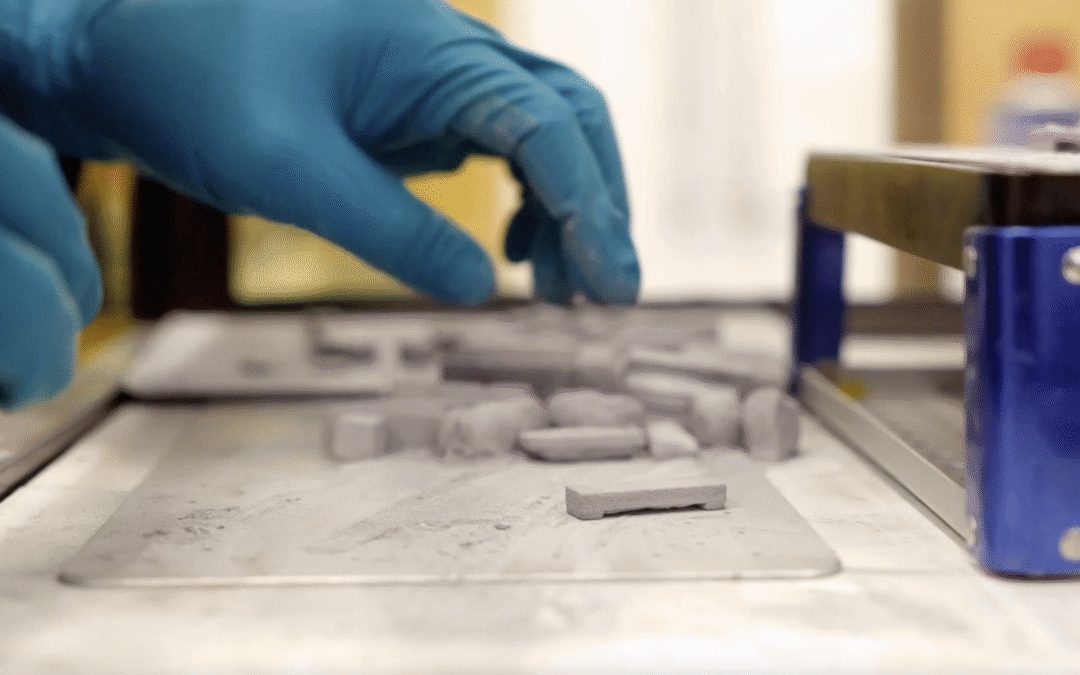
Binder jetting often demonstrates its potential first in controlled laboratory environments. Early development work tends to focus on whether a part can be printed successfully under tightly managed conditions. Those results are important, but they represent only the starting point.
Moving beyond the lab introduces a different set of requirements. Scaling binder jetting is not simply a question of increasing throughput. It changes how materials are expected to behave and how processes need to be controlled.
From Single Success to Repeatable Outcomes
In a laboratory setting, success is often defined by a single good print. At scale, success is defined by repeatability. Parts must print consistently across multiple runs, machines and operating conditions.
This shift exposes sources of variability that can remain hidden during early testing. Small changes in powder characteristics, environmental conditions or machine behaviour can have a disproportionate impact on print quality when volumes increase. Materials that appear robust in isolation may struggle when subjected to the realities of production.
Material Behaviour Under Real Production Conditions
Production environments are rarely uniform. Binder jetting systems differ in printhead configuration, powder handling and process control. Powders vary in chemistry, morphology and flow behaviour. These differences become more significant as production volumes increase.
Binders designed for narrow operating windows often require frequent adjustment to maintain performance. At scale, this approach becomes inefficient and risky. Materials need to tolerate variation and perform predictably across a wider range of conditions. Achieving this requires a chemistry-led understanding of how the binder interacts with different powders and machine platforms.
Process Discipline Replaces Trial and Error
As binder jetting moves into production, informal adjustments and operator-led optimisation become less viable. Processes must be defined, documented and repeatable.
This applies across the entire workflow, from printing through to curing, depowdering and sintering. Clear parameter windows, controlled change management and consistent quality checks reduce reliance on individual experience and help stabilise output. Without this discipline, scaling efforts can quickly lead to inconsistent results and increased scrap.
Validation Becomes More Important Than Claims
At production scale, partners and customers need evidence that a process will perform reliably. Demonstrations and isolated examples are no longer sufficient.
Validation data from repeat runs, defined acceptance criteria and transparent testing methodologies provide confidence. Performance metrics matter, but predictability and consistency are what enable adoption in real manufacturing environments.
A Changing Role for the Materials Supplier
As binder jetting scales, the role of the materials supplier evolves. Materials are no longer evaluated in isolation. They form part of a wider system that includes machines, powders and downstream processes.
Supporting production applications requires close collaboration, a shared understanding of application requirements and a willingness to engage beyond initial trials. This partnership approach helps ensure that materials are designed and deployed with long-term performance in mind.
Designing for Scale From the Start
Scaling binder jetting brings challenges, but it also creates opportunities to build more robust and industrially relevant solutions. By designing materials with scale in mind from the outset, it becomes possible to bridge the gap between laboratory success and dependable production.
The transition from lab to production is where binder jetting proves its value, not just as a promising technology, but as a reliable manufacturing process.
If you’re exploring how binder jetting can move from development into production, we’re always open to discussing materials behaviour, process challenges and real-world applications.