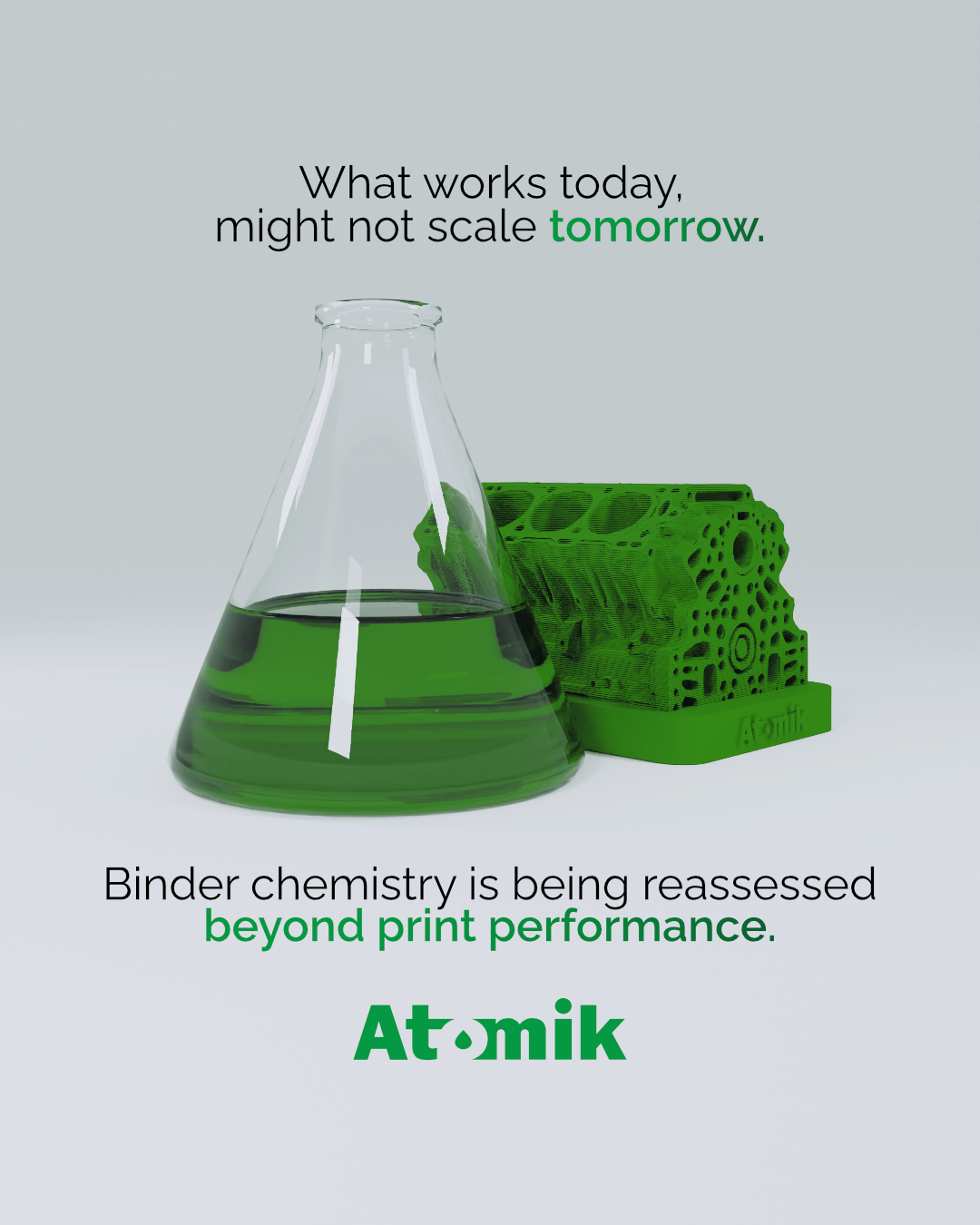
Two binder systems can produce similar parts while placing very different demands on the process around them. That difference is not always visible in the printed component. It appears in how much control is needed to keep the system consistent once the binder is used regularly.
Some binders behave very differently once they move from testing into regular production use. A material may print successfully during development while still becoming harder to manage consistently over time.
A binder that performs well should not add unnecessary burden to the process around it.
Binder Stability in Production
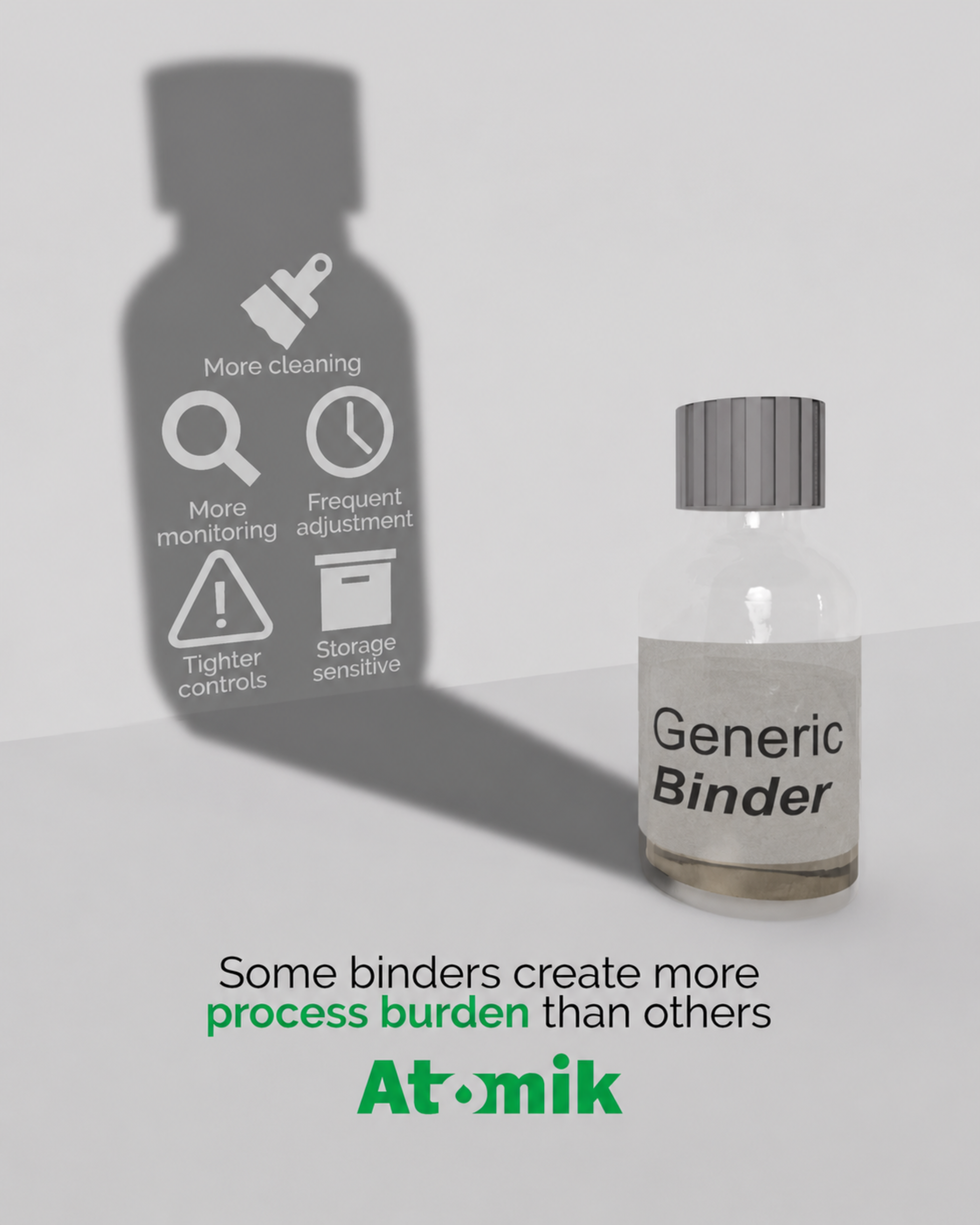
A binder may produce acceptable parts while still requiring increasing control around the process. Over time, operators may find themselves making more adjustments between builds or paying closer attention to how the material is handled day to day. Cleaning routines may also become more involved as the binder continues moving through the system.
None of this necessarily stops production. Parts may still remain within specification, which can make the issue harder to identify at first. The difference is that maintaining consistency gradually starts requiring more intervention around the material itself.
When Process Intervention Increases
Additional burden often enters the process gradually. A workflow that initially feels stable may become less tolerant to variation over time, with small environmental changes affecting consistency more noticeably than they did during early testing.
Materials may need closer monitoring to remain inside a stable operating window. Those requirements become part of the manufacturing process whether they were planned for or not. As production volume increases, more operational attention may be needed simply to maintain the same level of consistency.
How Binder Chemistry Affects the Workflow
Binder formulation affects how the material behaves beyond the point of printing. This includes how it responds during storage, repeated circulation and post-print processing.
Where tighter controls are needed, those controls become part of the wider workflow around the binder. This becomes more noticeable as production scales because the material is no longer being used occasionally or under close development supervision. It becomes part of a routine manufacturing environment where consistency matters every day.
Developing Binders With Routine Use in Mind
Binder jetting will always require controlled processing conditions. The role of the binder is not to remove that discipline, but to avoid introducing additional pressure around the process.
Atomik AM approaches formulation with long-term production use in mind. The aim is to develop binder systems that remain practical through repeated use without increasing dependency on constant adjustment or intervention.
Reducing avoidable process burden makes production easier to manage as operations scale.
Why Binder Choice Matters at Scale
As binder jetting moves further into manufacturing environments, materials are judged against more than whether they can produce successful parts. Regular production use exposes how much support the process needs in order to remain stable over time.
Some systems place more responsibility on the surrounding process to maintain consistency. Others are developed with those production conditions in mind from the beginning. That difference becomes more visible once the process moves beyond isolated builds and into regular manufacturing use.
Production environments expose behaviours that are not always visible during early testing. Binder choice becomes part of how manageable the wider process remains once manufacturing scales.
Get in touch to discuss binder systems designed with long-term production use in mind.