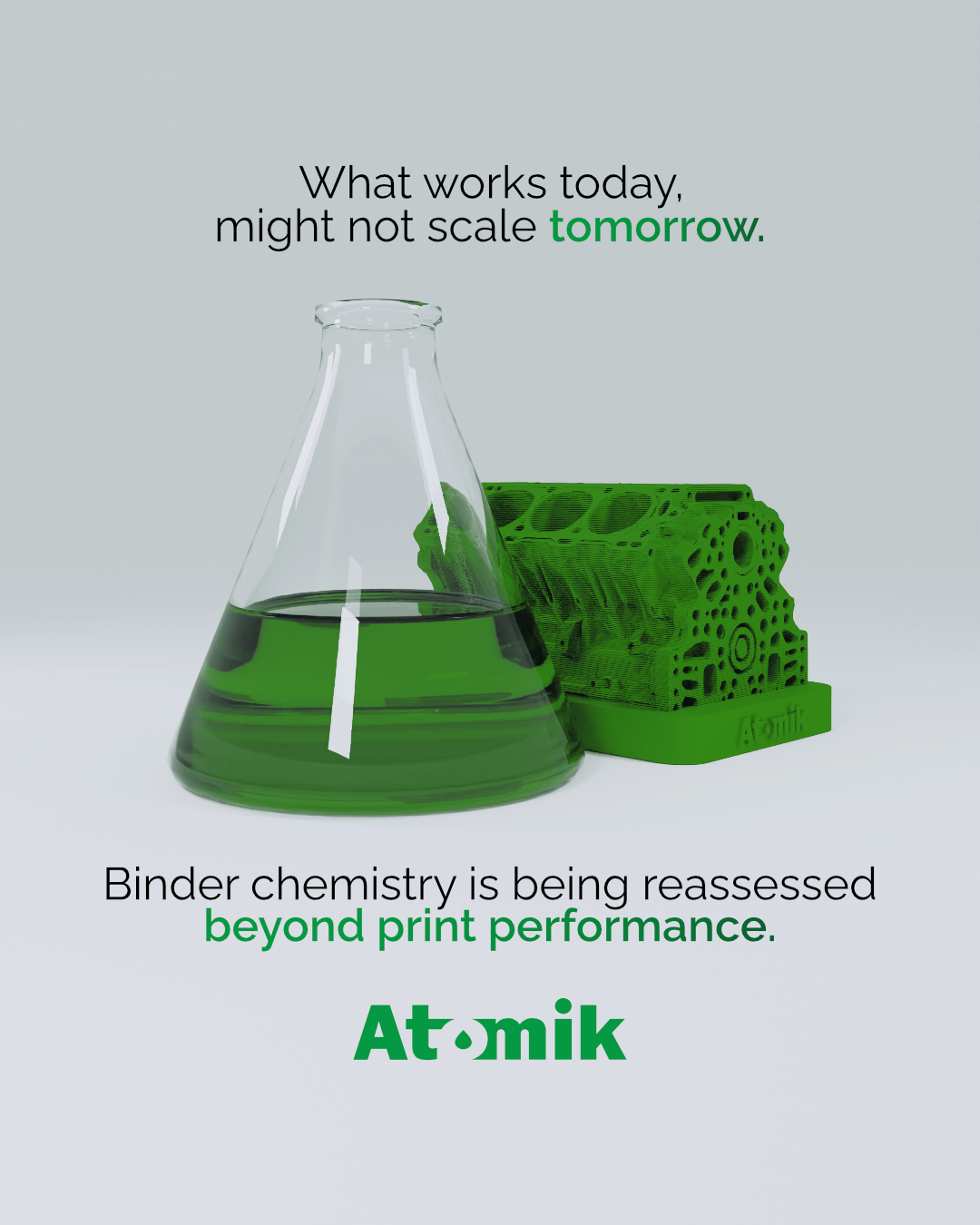
Binder chemistry is usually discussed in terms of print performance and final part quality. Less attention is given to how those materials are handled during normal operation and what that means over time.
In production environments, binders are used every day, often in significant volumes. Handling becomes routine within the process. Two systems may produce similar parts, while creating very different day to day conditions for the people using them.
Repeated exposure matters
In many binder jetting workflows, materials are introduced, transferred and topped up as part of standard process steps. This can involve manual handling or working around systems that are not fully enclosed.
The question is often whether a material is compliant. That matters, but it does not describe the reality of daily use. Repeated contact over time creates a different situation from a single controlled interaction. Where binders contain solvents under scrutiny, frequency of use becomes part of the risk profile. The issue is not only what sits in the formulation. It is also how often people are expected to work with it.
Volume changes the picture
Binder consumption at production scale is not trivial. Systems can use tens of litres over short periods, particularly when machines are running continuously.
That changes the working environment. Storage, transfer and refill are no longer occasional tasks. They sit within the normal rhythm of production. Even where each step is controlled, repeated handling increases the number of opportunities for contact.
Not all systems are fully enclosed. Operators may be working close to open or partially open processes during production and maintenance. In that context, the properties of the binder directly affect the conditions people are working in. A material that appears manageable in theory can create more difficulty when it is handled regularly on the shop floor.
The burden often sits with the operator
Binder jetting systems are typically run by engineers or technicians whose priority is to keep the process stable and maintain output.
They are not specialists in chemical formulation. When materials require close interpretation of safety data or strict handling procedures, that burden moves to the operator. A binder may meet regulatory requirements and still be difficult to work with in practice. As use becomes more frequent, the gap between compliance and routine usability becomes easier to see.
Binder choice therefore reaches beyond material performance. It affects the practical conditions around the process and the people expected to run it reliably.
Designed with handling in mind
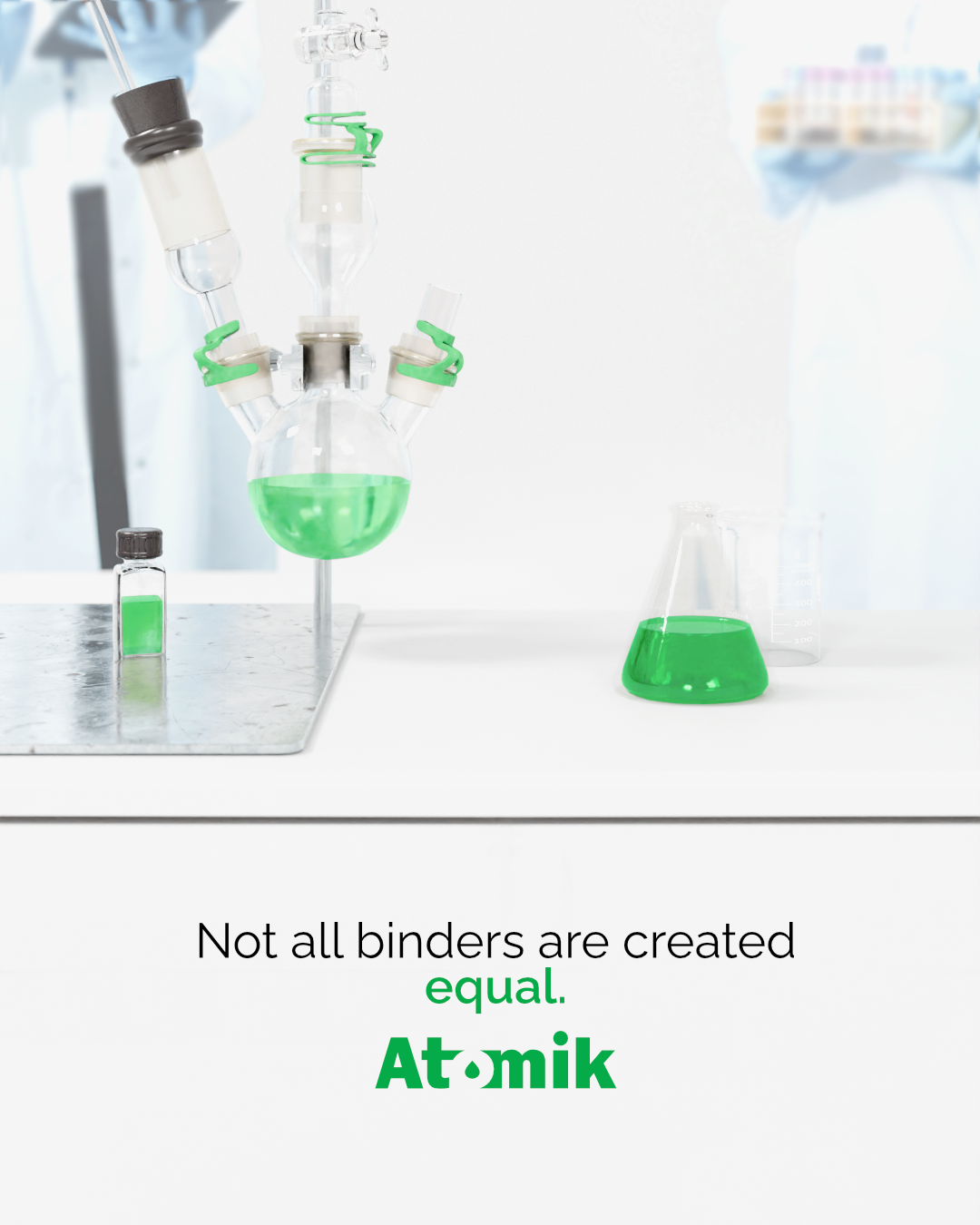
Binder chemistry can be developed with routine use in mind.
At Atomik AM, that is part of the design process. The aim is not simply to produce a binder that is acceptable to use. It is to develop a system that reduces unnecessary handling burden and is safer to work with in daily production. That distinction matters. There is a difference between a binder that clears a minimum threshold and one that has been developed to reduce risk in practice.
This means reducing reliance on solvents that bring added concern and developing chemistries that fit more naturally into day-to-day operation. The result is a binder system that places fewer demands on the people using it while still supporting process performance.
Performance is only part of the decision
As additive manufacturing moves into production, the way materials are handled carries more weight. A process may print well while creating unnecessary difficulty in daily use. If a binder is handled repeatedly, used in volume and managed by production staff as part of routine operation, those conditions need to be considered as part of the material decision.
This is one of the clearest differences between a binder selected for technical performance alone and one developed with production use in mind. Performance matters and so do the conditions created around the process.
If this reflects what your team is dealing with day to day, get in touch to discuss your process.